

Fame
Now that I have 191 followers on substack, I’d like to share some reflections on fame.

In 1934, after her second suicide attempt, the then-obscure Louise Bourgeois wrote a list of “rules to live by” in her diary: “eat healthily, rise early in the morning, tidy up, beware of worldly and bourgeois people who are supposedly interested in art but who have no soul and only respect famous people.”1
I re-read this quote when I find myself craving the attention of worldly and bourgeois people/publications/institutions that only respect famous people.
Here’s Montaigne: “Let your public be just one person or indeed let it be your own self. It is a poor sort of ambition that in your private retreat leads you to conceive hopes of a crown of laurels as a reward for your idleness... You should stop caring about how people talk about you, and care only about how you should talk to yourself.”
There seems to be a persistent and widespread belief that glory (kleos) and wealth (nostos) lead to happiness, but consider the public contumely famous people are routinely exposed to: an off-color joke or awkward interaction could result in lasting social annihilation. I recently wrote to a super-famous correspondent that I was lucky enough to “write terrible poems and blow up my life in obscurity.”
Or remember Ishmael’s warning in Moby-Dick, “Oh young ambition, all mortal greatness is but a disease.” Melville himself, despite his prominent posthumous position in the Western Literary Canon, died with the reputation of being a failed author of boy’s adventure yarns/ a general psychotic.
Tolstoy defined fame as “being proud of one’s crimes.”
I surprised myself by developing an obsession with tarot and astrology, which I superciliously derided until about two months ago. After paying for a professional astrology reading, I had to ban myself from Psychic Sister, lest I go broke in a manic quest for clarity in the form of energy work, crystals, and aura photographs. The astrologer told me that I’d spend the next seven years making the “work that outlives me.” She advised me to rely on my community and paid subscribers. When I told her that I was anathema to self-promotion, she said, “Promote your writing, not yourself.”
I haven’t always been happy when friends of mine went on to achieve their dreams while I continued to flounder in obscurity with no prospects, no career, no car, no shower curtain, and no dad. There’s no shortage of self-pity to be found in such invidious comparisons. Envy is the only sin that isn’t any fun.
(A few years ago, I dated a nice person. In an effort to appear normal and put together, I rapidly bought a dining table, a shower curtain, a set of plates, and utensils (I only had small spoons).
Last week, I bought a car.
I’m becoming.)
There is no such thing as a famous poet; in order for poets to be famous, people would have to read poetry.
People read headlines, emails, and social media posts.
There are a few famous artists. Their visage can be found on novelty votive candles, dusty mugs, and socks. My socks, for example, have Yayoi Kusama’s face on the toes.
I used to fantasize that I, too, would be famous enough to be on a sock.
Here’s Warhol: “Being famous isn’t all that important. If I weren’t famous, I wouldn’t have been shot for being Andy Warhol. Maybe I would have been shot for being in the army.”
Or Emily Dickinson: “How dreary – to be – Somebody!/ How public – like a Frog –/ To tell your name – the livelong June –/ To an admiring Bog!”
Emily Dickinson is famous (to poets and poetasters) for not being famous. Despite being the subject of biopics, tv shows, and numerous biographies, she published almost nothing in her lifetime. Without readers and heartwarming words of encouragement, what motivated her to keep writing?
What’s bigger than fame?
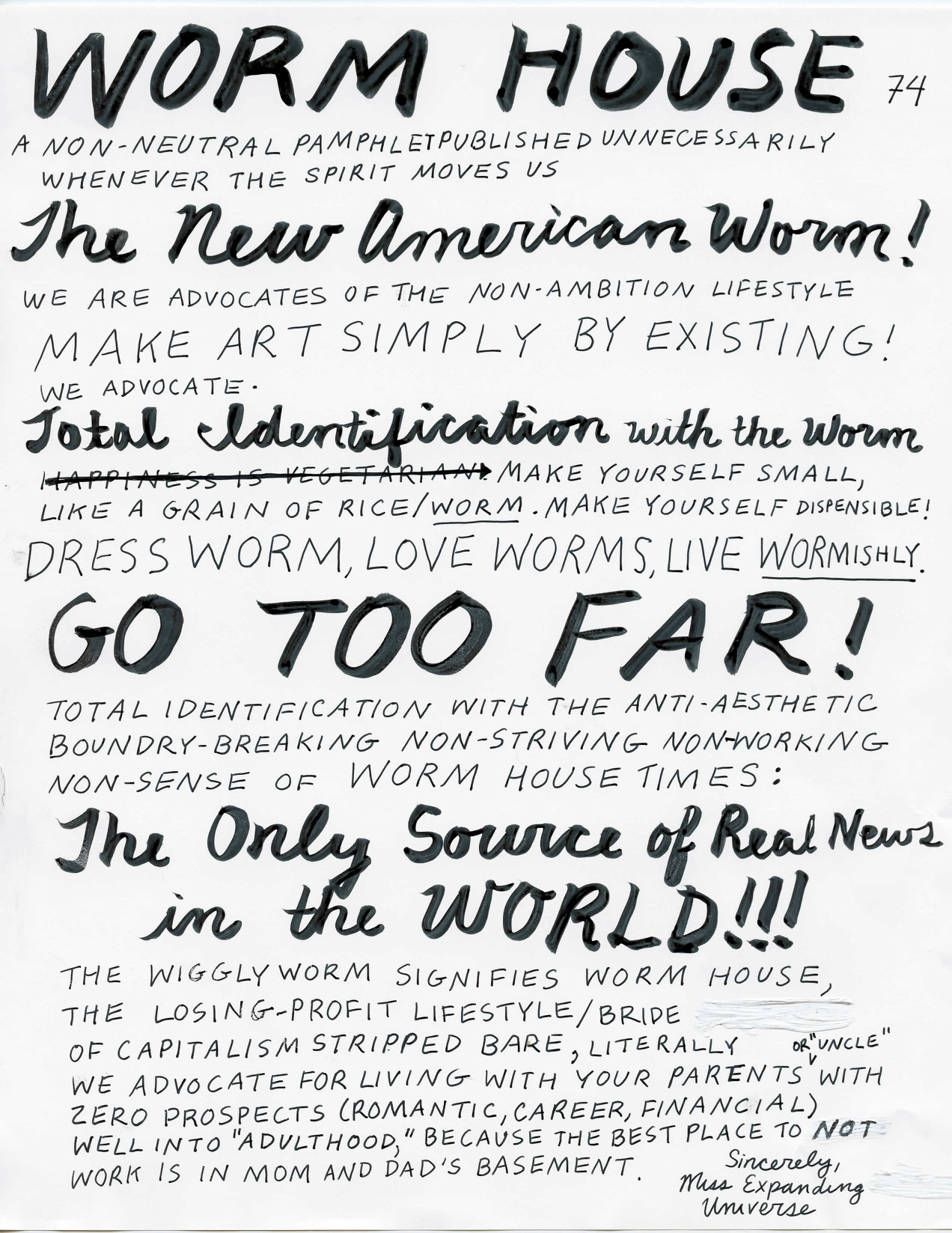
I read about this in the Winter 2026 Issue of Bookforum.
I genuinely can't wait to sell your autograph on ebay one day. also congratulations on the car <3